

Minesweeper XY
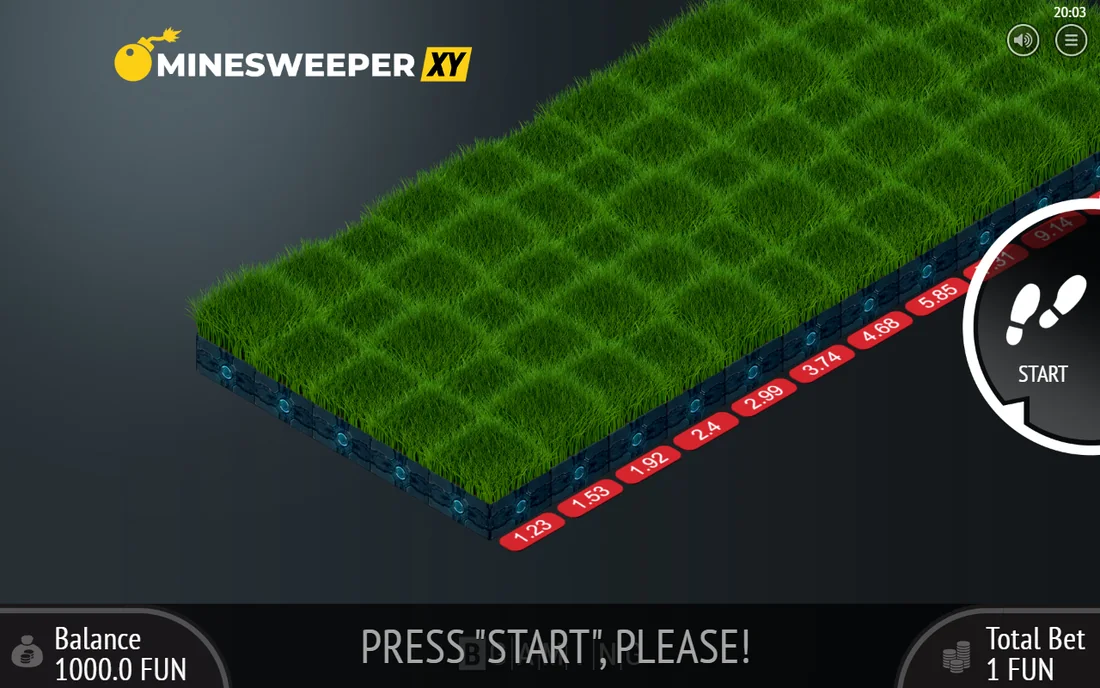
BGaming's second path, the same RTP 98.4 and a different field geometry. Open the demo in the review.
Demo · no sign-up · play credits
A demo is not for entertainment; it is for one piece of knowledge - how often a round ends on the very first click. With money that knowledge costs money; on play credits it costs nothing. Below, eight versions from the platform open in place, each with a full-screen button, plus a round on video for those who want to watch first.
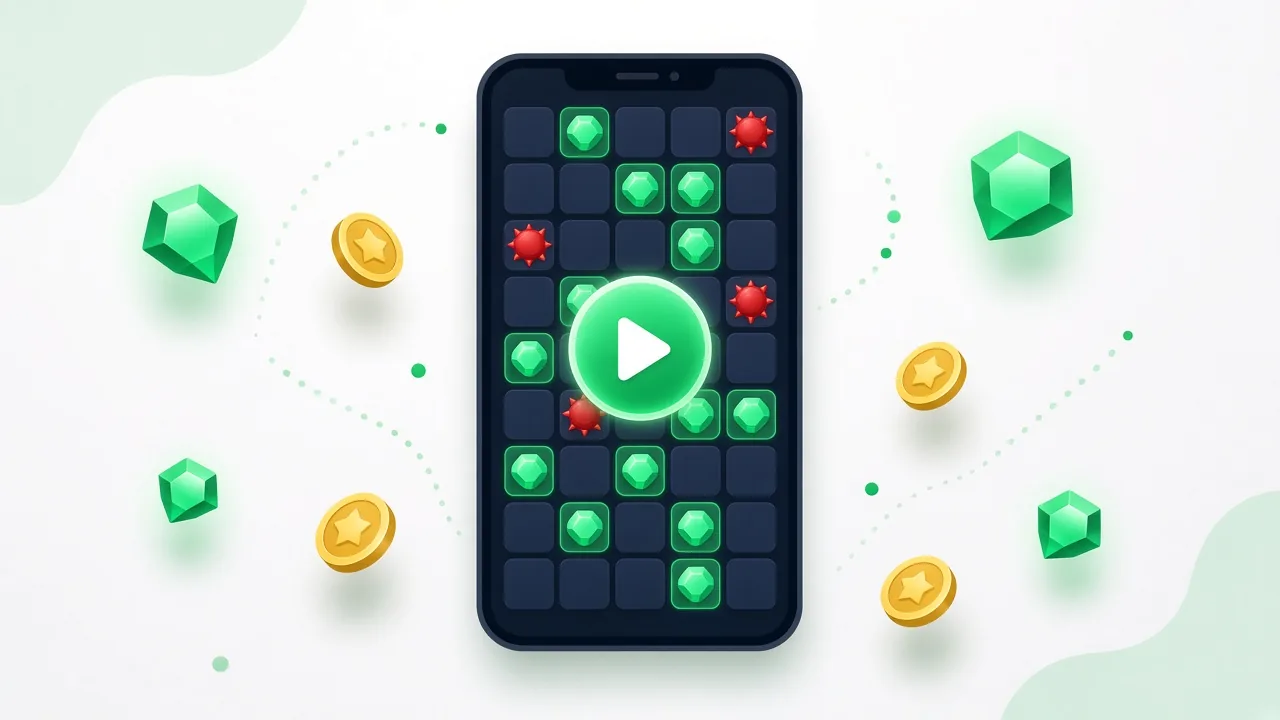
RTP 98.4, a path instead of a grid, 3 to 15 steps. The mechanic is harder to grasp from a description than from two rounds - which is why it comes first.
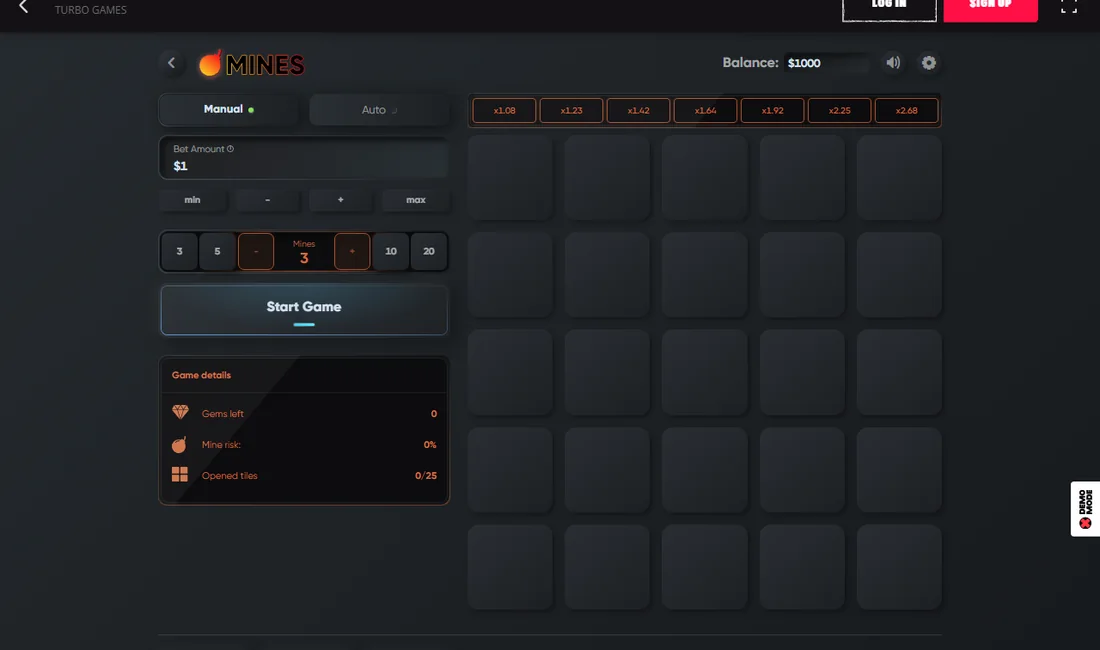
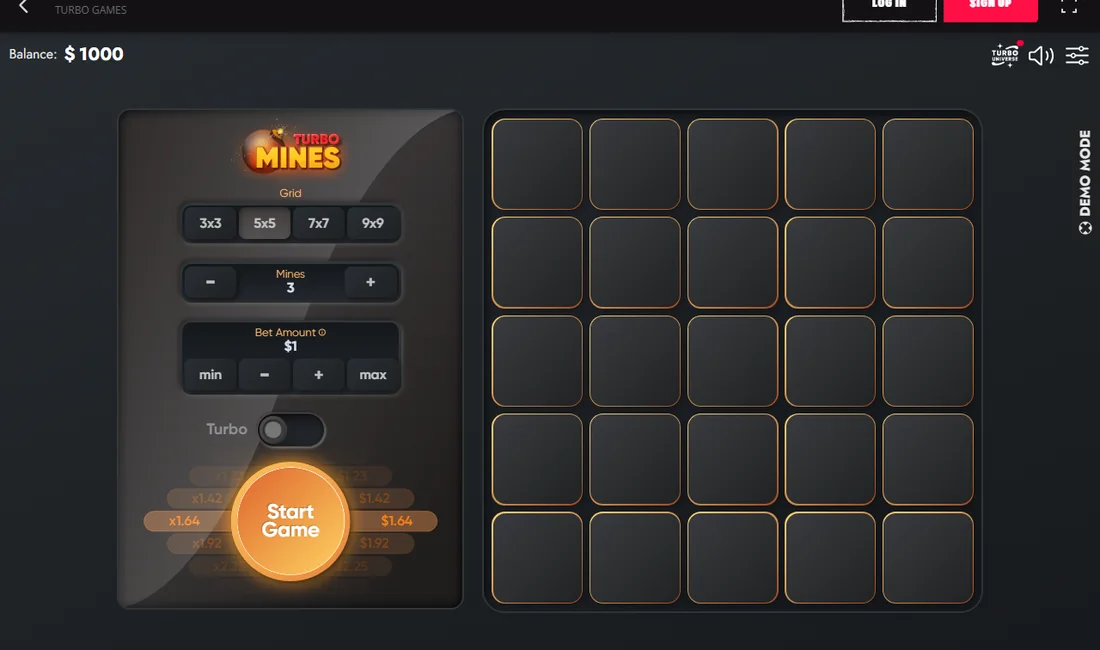
RTP 95, you set the mine count, cash out after any click. The best version for watching the multiplier ladder grow.

What to try: set 3 mines and cash out on the third tile ten rounds in a row, then set 10 mines and try the same. The second experiment ends faster - roughly four rounds in ten stop on the first click. That is the difference between the modes, and in the demo it is free.
The size switch is in the left column. On 9x9 there are 81 tiles, and the ladder runs further than anywhere else in the set.

RTP 97, a 3x3 or 5x5 grid, and under a tile a coin, a mine or a jackpot symbol worth up to 200 EUR. The demo launches from the studio's showcase.
Each opens on its game page with the same button, no account needed.
BGaming's second path, the same RTP 98.4 and a different field geometry. Open the demo in the review.
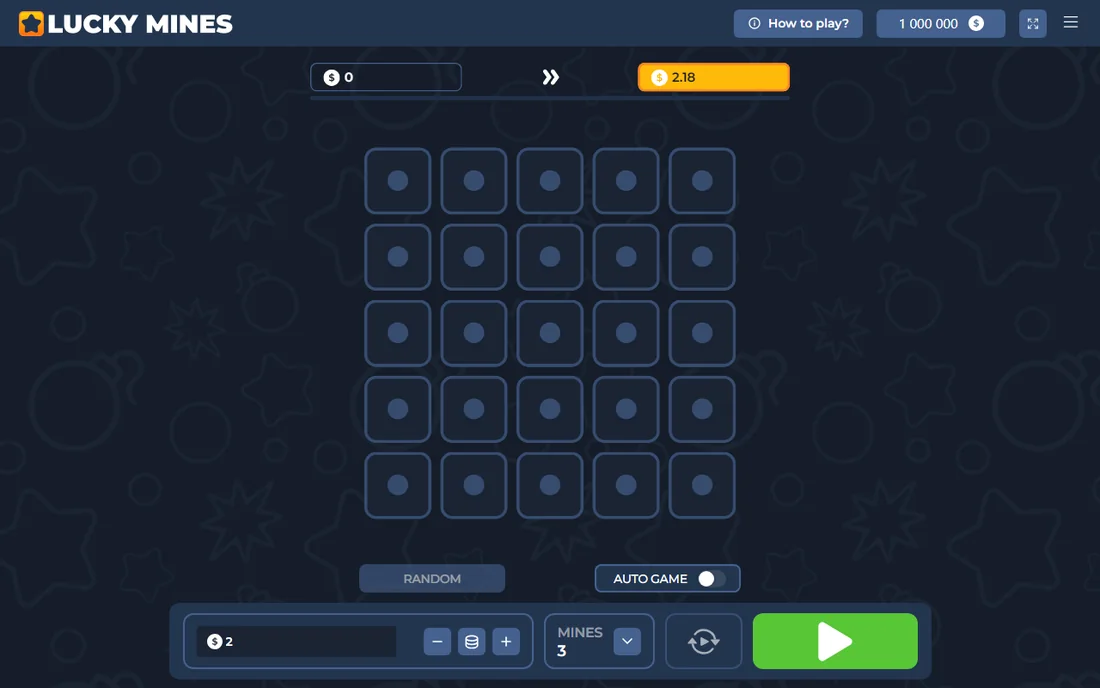
A 5x5 grid, exactly 3 mines, the whole round in one tap. The shortest demo in the set. Open the demo in the review.
The same four grids as Turbo Mines, in Egyptian dress and with an 805001x ceiling. Open the demo in the review.
Belatra with a 3x3, 4x4 or 5x5 grid and autoplay for 10, 20 or 50 rounds. Open the demo in the review.
Hacksaw Gaming, Pragmatic Play, InOut Games, Mascot Gaming and OneTouch do not serve a public demo frame: their demo switches on with a button next to the game window on the platform, before any deposit. It is no worse, it just needs an account.
Three things. First, how fast a round ends at your chosen mine count: at 3 mines a click lands 88 times in a hundred, at 10 mines 60, and seeing it is more useful than reading it. Second, the multiplier ladder on the first five tiles: at RTP 95 and three mines the first step is 1.08x by the formula, the fifth 1.92x, and you will feel for yourself on which of them your hand reaches for the button. Third sounds funny - where the cash-out button is in the interface. Funny exactly until you have to find it by eye on the fourth tile at ten mines.
The gap between RTPs. Between 98.4 and 92 lie 6.4 points, and over a hundred rounds you will not see it at all: both games will return a random amount, and which is larger is decided by luck. The gap shows over thousands of rounds, and nobody plays that many in a demo. Your own behaviour: in a demo it is easy to cash out on the third tile because there is nothing to lose, while with money the same button presses differently - and that is exactly where the systems that worked in the demo break. And the ceiling: at Hacksaw it is 10000 stakes, at InOut 20000 USD; you will not reach it in a demo, and in the real game it decides which multiplier makes any sense at all.
Seen enough? Move to the real grid
All eight demos and the rest of the set live on one platform.
Only in the balance. The mine layout is generated by the same code, multipliers are computed by the same formula, the stated RTP is the same. One thing differs: the credits are play money and cannot be withdrawn. That is exactly why a demo is good for seeing the shape of a round and useless for feeling how the cash-out button presses with your own money on the line.
No. Eight versions from the set open right on this page and on the game pages: BGaming, Turbo Games and Belatra serve their demos without an account and without installing anything. For Hacksaw, Pragmatic Play, InOut, Mascot and OneTouch the demo lives inside the casino and switches on with a button next to the game window.
No. The demo balance is not connected to the cashier and cannot be transferred anywhere. The demo solves a different problem: showing how often a round ends on the first click at 10 mines, without paying for that answer.
Enough to stop being surprised. At 3 mines ten rounds are enough to see the frequency: a click lands 88 times in a hundred. At 10 mines you need about three times more - there the round ends on the first click forty times in a hundred, and on a short series that looks like bad luck rather than the norm.
The demo loads from the studio's server, not from this site, and only after you press the button. If the frame stays empty, it is most often an ad blocker or a browser setting that blocks third-party frames; open the same game on the studio's site via the link on its card.